Once you've added a section to your page, the next step is to add a row inside it. Rows are what let you split a section into neat columns — so you can place things side by side, like an image on the left and text on the right, instead of everything stacked in a single line down the middle.
This guide shows you both ways to add a row, what columns are, and what to do right after.
First, a quick picture of how a page is built
FlexiFunnels builds every page in a simple top-to-bottom order:
Section → Row → Element
- A Section is a big horizontal band of the page (think of it as a room).
- A Row sits inside a section and divides that space into columns (think of lanes within the room).
- An Element (text, image, button, etc.) goes inside a column.
So a row is the middle layer. You can't put a button straight onto a blank section — you add a row first, pick how many columns it has, and then drop your content into those columns. This is the single most useful thing to understand before you start.
Why rows matter: The number of columns in your row decides your layout. One column = content runs full width. Two columns = two things sit side by side. Three columns = a nice "three features" or "three pricing cards" look. You're really choosing the shape of that part of your page.
Before you start
Make sure you already have at least one section on your page. If your canvas is completely blank, add a section first (see Adding Sections in the Landing Page Editor), then come back here.
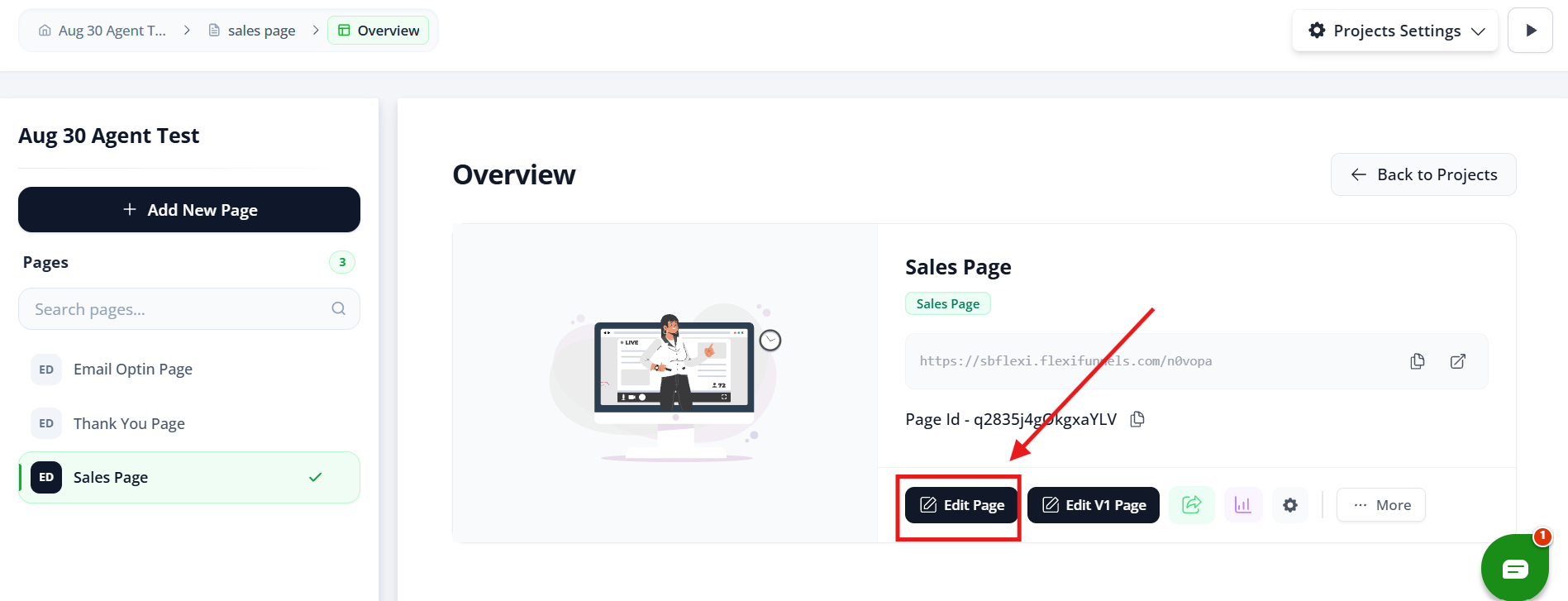
Step 1 — Open the Landing Page Editor
Open the page you want to work on in the editor.
Step 2 — Click on the Components Option
On the left side of the editor, click the Components Option.
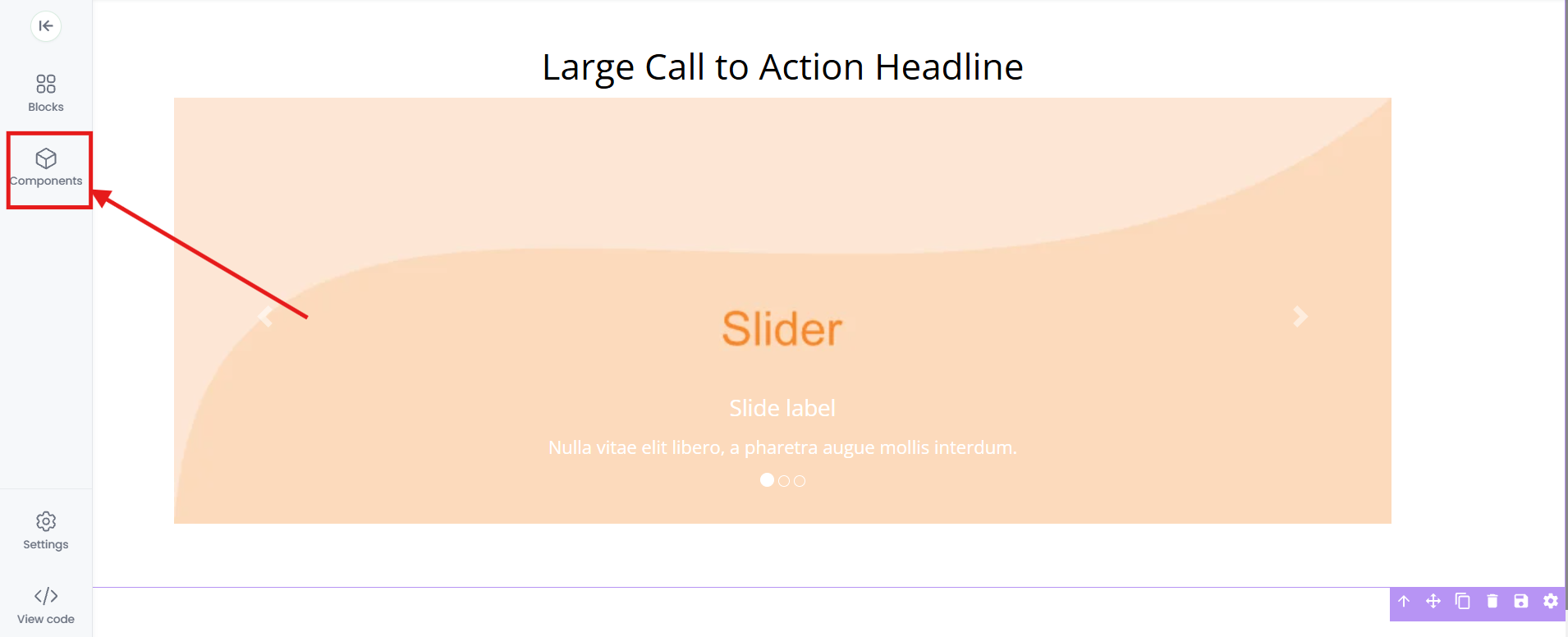
Here's the difference between the two tabs, so you pick the right one:
- Components — the raw building blocks (sections, rows, elements) you assemble yourself. This is what you want for adding a row.
- Design Blocks — ready-made, pre-designed pieces you can drop in and tweak. Useful later, but not what we need here.
Step 3 — Then choose Rows
Open the Components tab and look for Rows. You'll see several column layouts to choose from — 1 column, 2 columns, 3 columns, and so on.
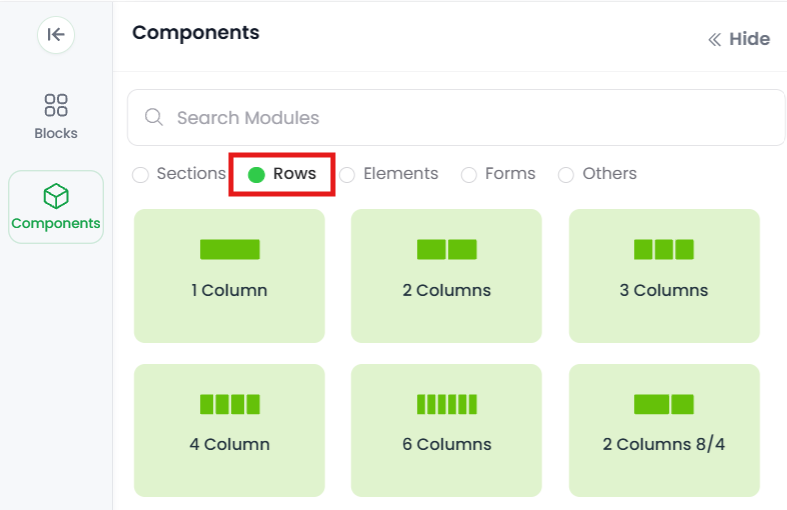
Each layout is just a different way of splitting the space:
- 1 column — one full-width area. Good for a headline or a single image.
- 2 columns — two side-by-side areas. Great for "image + text" or "text + form."
- 3 columns — three side-by-side areas. Perfect for three features, three steps, or three pricing options.
After adding the “row” it will show something like this,

Here 1 COLUMN is added from the different categories of columns available in the row component.
One can also add "row" by hovering on the existing row added in Flexifunnels Landing Page Editor and clicking on "+add row".

To add a new row below the existing row, Hover on the existing row and click on +Add row, visible when you hover on the existing row.
Common situations & quick fixes
"I clicked Components but I don't see a + icon / the panel won't open." The Plus (+) icon lives on the left side of the editor. If you don't see it, you may not be inside the page editor yet — open the specific page you want to edit, not just the project list, and the editor toolbar (including the + icon) will appear.
"I added a row but the page still looks empty." That's expected — a row is just an empty container. It only shows something once you add elements (text, image, button) inside its columns. Click into a column and add your content.
"I picked the wrong number of columns." No need to delete and start over. You can adjust the column layout from the row's settings (hover the row and open its settings/gear), or delete just that row and drop in a new layout. Picking the layout isn't a permanent decision.
"My two things are stacking on top of each other instead of sitting side by side." Side-by-side content needs a multi-column row (e.g. 2 columns), with one element in each column. If both elements are in the same single column, they'll stack. Add a 2-column row and place one item in each column.
"The +Add Row button won't appear when I hover." The hover shortcut only works over an existing row inside a section. If the section has no rows yet, use Method 1 (Plus icon → Components → Rows) to add the first one, then the hover shortcut becomes available.
"I want to move a row or change its order." You can drag a row up or down within its section to reorder it, or use the row's controls (shown on hover) to move or duplicate it — no need to rebuild.
"I deleted a row by mistake." Deleting a row also removes everything inside it (all its columns and elements). If you removed one accidentally, re-add the row and its content, and use the editor's undo where available before saving.
Still stuck?
If a row won't add or behave as expected after trying the steps above, submit a ticket and let us know which page you're editing and what you're seeing on screen — a screenshot of your editor helps us sort it out fast.
Was this article helpful?
That’s Great!
Thank you for your feedback
Sorry! We couldn't be helpful
Thank you for your feedback
Feedback sent
We appreciate your effort and will try to fix the article