An exit-intent (or leave-intent) pop-up is a little window that appears at the exact moment someone is about to leave your page — like a shopkeeper saying "Wait, before you go… here's a discount!" just as a customer reaches the door.
On a computer, FlexiFunnels notices when a visitor moves their mouse up toward the browser's close button or address bar, and shows your pop-up right then. It's a great last-chance way to keep visitors, capture a lead, or push a final offer.
This guide shows you how to switch a pop-up to the Leave Intent trigger — and, importantly, how to test it properly so you don't think it's broken when it's actually working.
? New to pop-ups? Build the pop-up itself first using How to add a Popup in FlexiFunnels. This article only covers the Leave Intent trigger.
Step-by-Step Guide
Step 1 — Open Your Editor Space
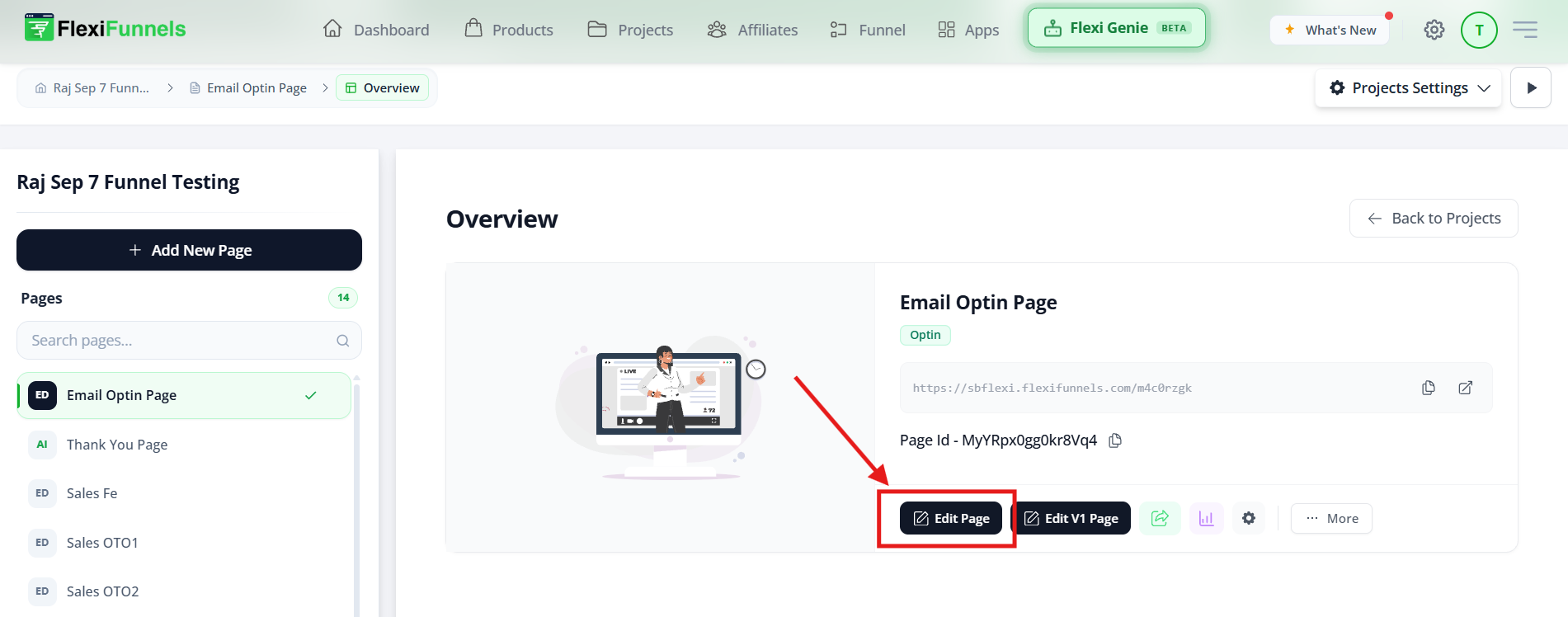
Open the landing page you want, and click into the page editor (the drag-and-drop building screen).
Step 2 — Open the Gear Settings and Add the Pop-Up
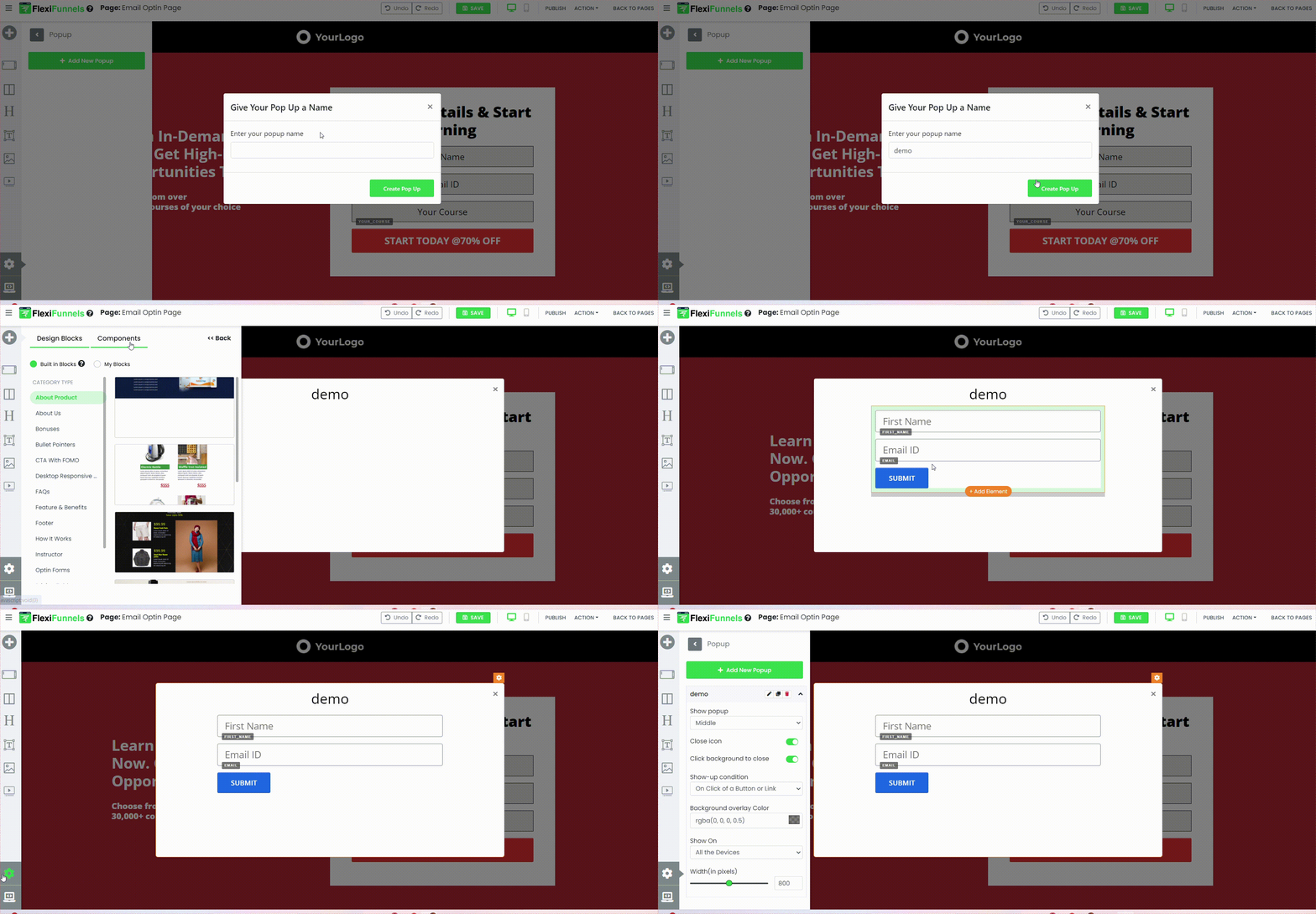
- Click the gear ⚙️ icon on the lower-left side of your editor space to open the settings menu.
- Select “Popup” to add a pop-up to your page.
? The lower-left gear opens whole-page settings (where Popup lives). The gear on an element only changes that element.
Step 3 — Customize Your Pop-Up
Build what's inside the pop-up — text, images, buttons, or a form — to match your goal (an offer, a discount, a quick question).
? Capturing leads in this pop-up? A form inside the pop-up still needs to be connected to an autoresponder, or the emails go nowhere. See Form Element Settings.
Step 4 — Set the Show-Up Condition to “Leave Intent”
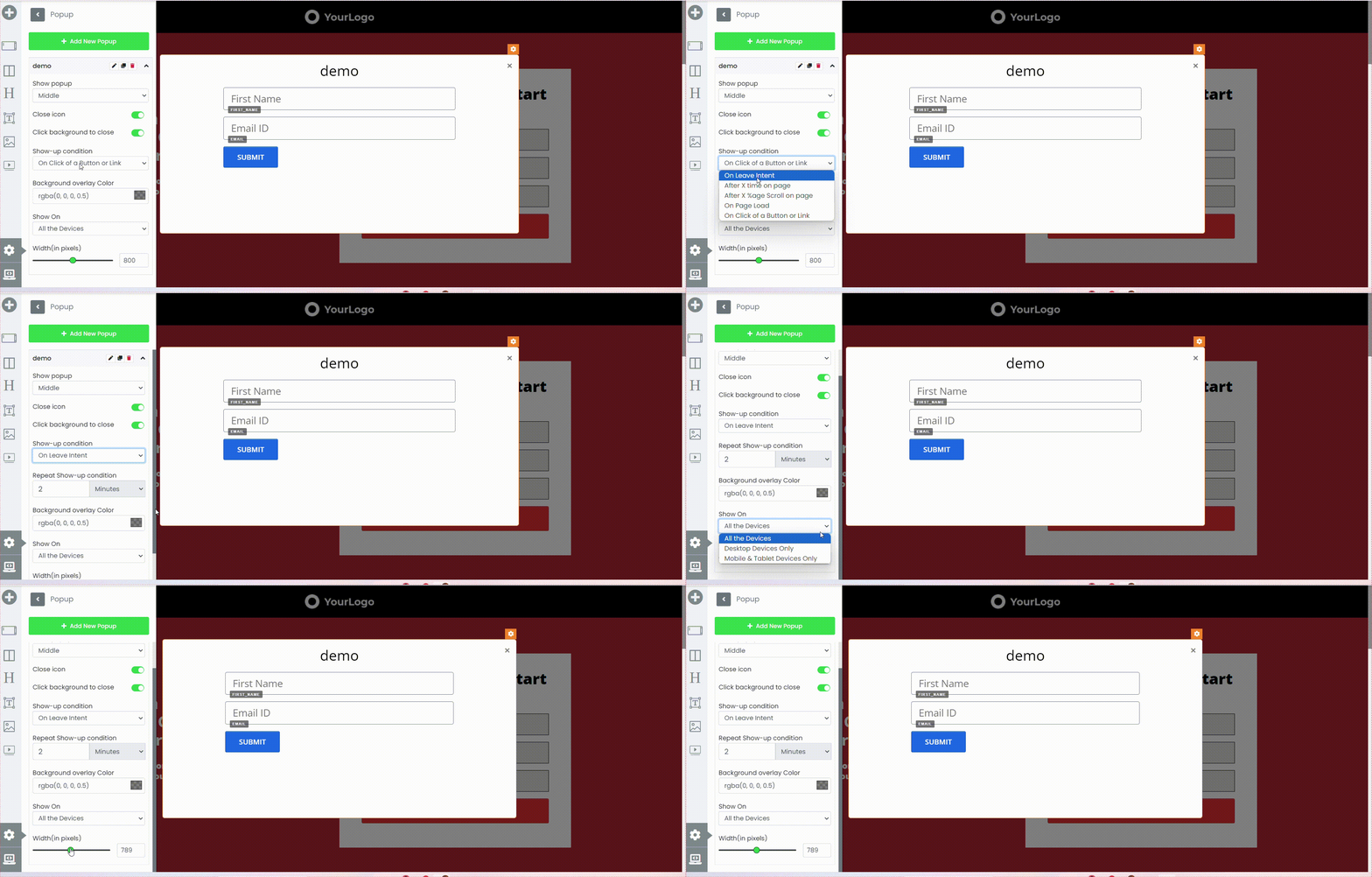
Open the pop-up's Show-Up Condition setting and choose “Leave Intent.” This tells the pop-up to appear when a visitor looks like they're about to close the tab or switch away.
⚠️ Read this before you test — it saves a lot of confusion. Leave Intent works by detecting the mouse moving toward the top of the screen (toward the close button or address bar). That means:
- It's a desktop / laptop behavior. Phones and tablets have no mouse, so it generally won't fire the same way on mobile. For mobile visitors, pair this pop-up with — or use a separate pop-up set to — After X Seconds or After X% Scroll.
- To trigger it yourself while testing, move your mouse quickly up and out the top of the page, as if you're heading for the close button. Just sitting still won't trigger it.
Step 5 — Publish and Test
Click PUBLISH, then open the live page URL (not the editor preview) and test it.
⚠️ Two things people forget:
- Saving in the editor is not enough — you must PUBLISH for the pop-up to go live.
- Test on the real published URL. Exit-intent does not behave reliably inside the editor preview.
Why use an Exit-Intent Pop-Up? (Benefits)
- Reduce bounce rates — grab attention right as someone's about to leave and give them a reason to stay or act.
- Increase conversions — offer a discount, promotion, or valuable content to turn a leaving visitor into a lead or customer.
- Engage visitors — one last chance to address a concern or question before they go.
- Gather feedback — ask why they're leaving and learn how to improve.
- Promote special offers — highlight a limited-time or exclusive deal at the exit moment.
Common Situations & Quick Fixes
Most "my exit popup isn't working" reports are actually correct behavior or a testing mistake. Check these first.
“My exit-intent pop-up never appears.”
Walk through this in order:
- Did you PUBLISH the page? (Saving alone won't do it.)
- Are you on the live URL, not the editor preview?
- Did you actually trigger it — i.e., move your mouse up toward the top of the screen? Sitting on the page won't fire it.
- Are you testing on a phone? Exit-intent is a desktop behavior (see below).
- Has it already shown once this visit? Exit-intent pop-ups typically appear once per session so they don't nag — open the page in a fresh Incognito/Private window to test again.
“It works on desktop but never on mobile.”
This is expected. Leave Intent relies on mouse movement, and phones don't have a mouse. For mobile, use a pop-up with After X Seconds or After X% Scroll instead.
“The pop-up shows immediately, not when leaving.”
Your condition is probably set to On Page Load, not Leave Intent. Re-open the Show-Up Condition setting and switch it to Leave Intent.
“It only worked the first time.”
That's by design — exit-intent usually shows once per visit. Re-test in an Incognito window (or clear your site data) to see it fresh.
“People fill in the pop-up form, but no leads show up.”
The form inside the pop-up needs to be connected to an autoresponder, just like any other form. See Form Element Settings.
“I can't find the Show-Up Condition option.”
It's inside the pop-up's own settings panel (the same place you set its position and width). For the full list of options, see the detailed pop-up article below.
Quick Recap
- Open the editor.
- Lower-left gear ⚙️ → Popup.
- Customize the pop-up (connect any form's autoresponder).
- Set Show-Up Condition → Leave Intent.
- PUBLISH, open the live URL, and trigger it by moving the mouse up toward the top.
- For mobile, use a timed or scroll trigger instead.
Related articles
- How to add a Popup in FlexiFunnels — building and adding the pop-up itself
- Pop-up Element Settings — all pop-up settings and customization options
- Form Element Settings — connecting a pop-up form to your autoresponder
Still need help?
If you've published, tested on the live URL, and triggered it correctly on a desktop, and it still won't appear, we're glad to help. Please submit a ticket and include:
- The live page URL
- Confirmation you tested on a desktop (not mobile) in an Incognito window
- What you expected vs. what happened
- A screen recording showing your mouse moving to the top of the page (this helps us see the trigger attempt)
That detail lets us solve it on the first reply instead of going back and forth.
Was this article helpful?
That’s Great!
Thank you for your feedback
Sorry! We couldn't be helpful
Thank you for your feedback
Feedback sent
We appreciate your effort and will try to fix the article