How to set up and manage Conversion API pixels for accurate ad tracking using Claude or ChatGPT, once connected via MCP.
Overview
A Conversion API (CAPI) pixel sends purchase and event data directly from FlexiFunnels to ad platforms like Facebook. Once Claude or ChatGPT is connected to your FlexiFunnels account via MCP, you can add, manage, and link these pixels directly from your chat.
This article covers:
- Adding a new CAPI pixel
- Enabling or disabling a CAPI pixel
- Linking a CAPI pixel to a specific product
- Linking a CAPI pixel to an entire project
Before You Begin
- Make sure FlexiFunnels is connected to Claude (as a Connector) or ChatGPT (as a Plugin). See Connecting Claude to FlexiFunnels via MCP or Connecting ChatGPT to FlexiFunnels via MCP if you haven't done this yet.
- Have your Conversion API access token/credentials ready from the ad platform before adding a pixel.
- Know which products or projects should be tracked with this pixel.
Step-by-Step: Common CAPI Tasks
Step 1: Add a New CAPI Pixel
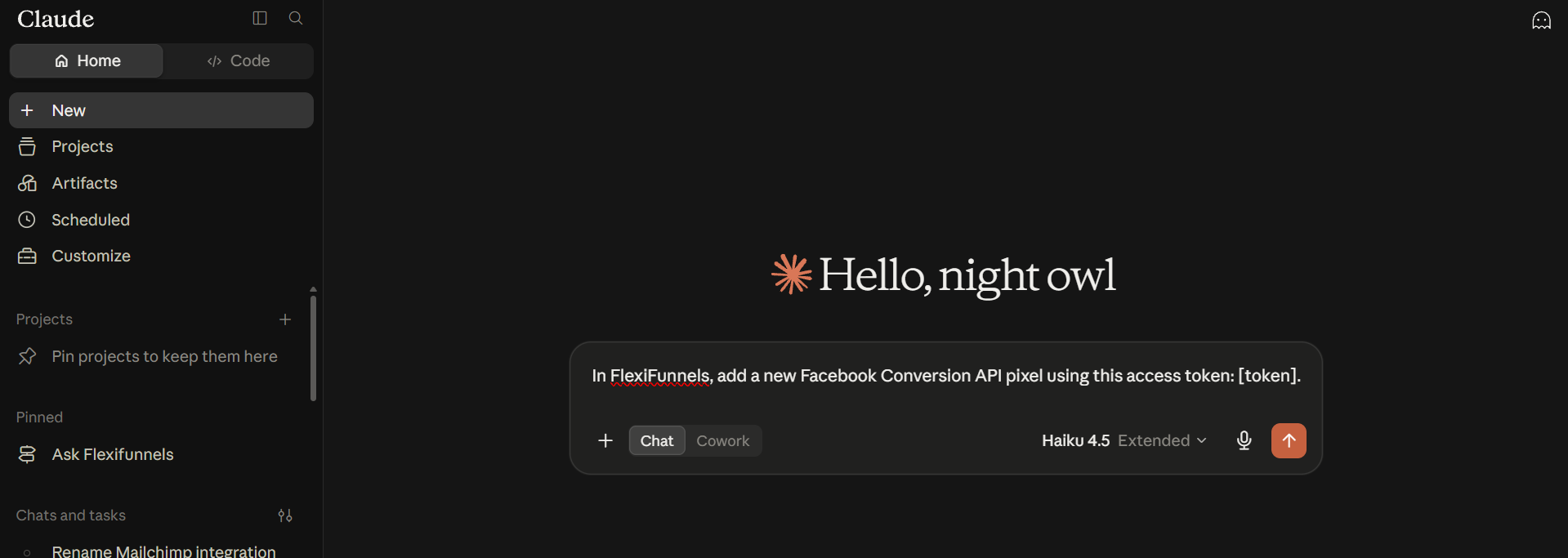
- Tell Claude or ChatGPT which platform's pixel you want to add and provide the required access token.
Example Prompt: "In FlexiFunnels, add a new Facebook Conversion API pixel using this access token: [token]."
Be Careful: Treat your CAPI access token like a password — only share it in a secure context.
Step 2: Enable or Disable a Pixel
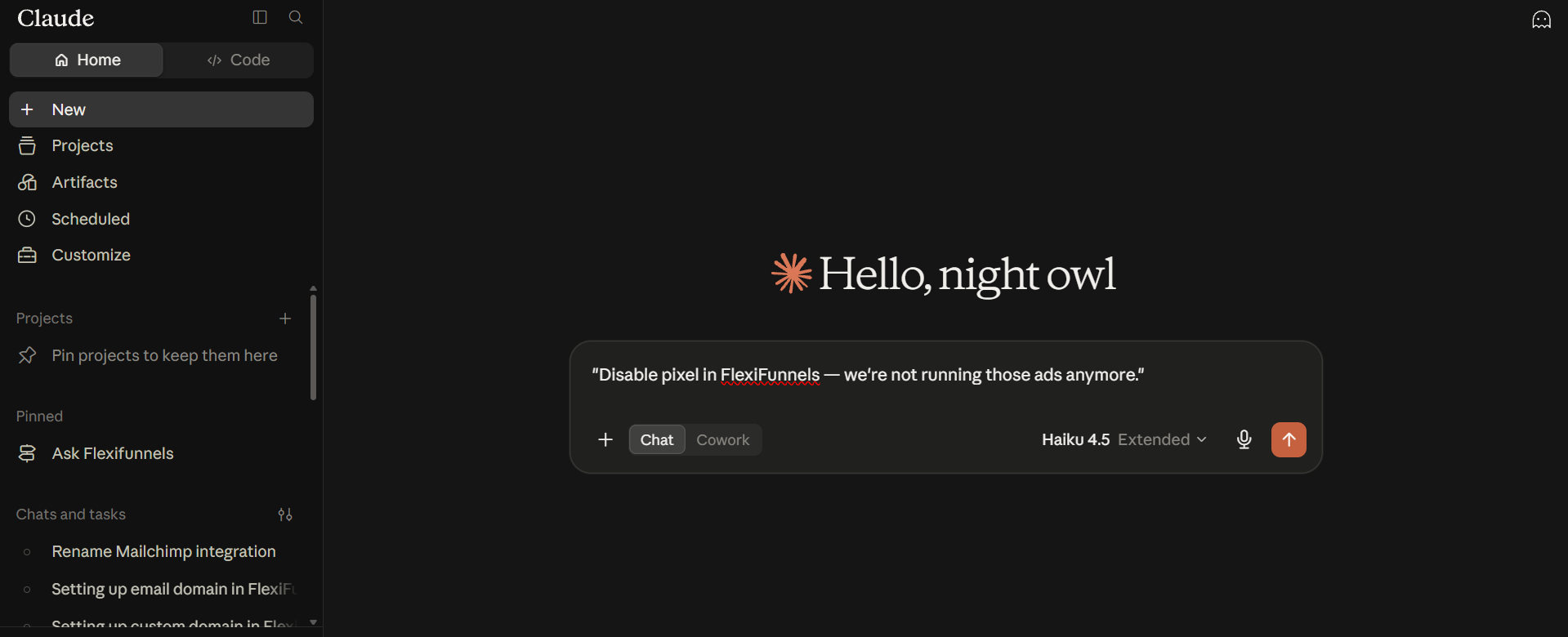
- Pause tracking from a specific pixel without removing its setup entirely.
Example Prompt: "Disable pixel in FlexiFunnels — we're not running those ads anymore."
Step 3: Link a Pixel to a Product
- Tell Claude or ChatGPT which pixel(s) should track conversions for a specific product.
Example Prompt: "Link my Facebook CAPI pixel to my FlexiFunnels 'Instagram Growth Masterclass' product."
Step 4: Link a Pixel to an Entire Project
- For consistent tracking across every page/product in a project, link the pixel at the project level.
Example Prompt: "Link my Facebook CAPI pixel to my entire FlexiFunnels 'Summer Course Launch' project."
Tip: Review which pixels are linked where periodically, especially after cloning a product or project.
Behind the Scenes — MCP Tools Involved
| Task | Related MCP Tool(s) |
|---|---|
| Add a new CAPI pixel | add_capi_pixel |
| Enable a CAPI pixel | enable_capi_pixel |
| Disable a CAPI pixel | disable_capi_pixel |
| Link a pixel to a product | link_capi_to_product |
| Link a pixel to a project | link_capi_to_project |
Good to Know: These are the same MCP tools used by Flexi Genie — Claude and ChatGPT simply give you a different chat interface to access them from.
Ready-to-Use Prompts
"In FlexiFunnels, add a new CAPI pixel using this access token: [token]."
"Link my FlexiFunnels Facebook CAPI pixel to my 'Email Marketing Mastery' product."
Tips for Better Results
- Mention "FlexiFunnels" explicitly if you have other connectors/plugins active in the same chat.
- Name your pixels clearly if you're running tracking across multiple ad accounts.
- Confirm tracking is working correctly using your ad platform's test event tool after setup.
Common Issues / Troubleshooting
Conversions Not Showing Up in Ad Platform: Confirm the pixel is enabled, correctly linked to the relevant product or project, and that the access token hasn't expired.
Limitations / Important Notes
- A CAPI pixel must be both added and enabled to send data.
- Access tokens for CAPI pixels are issued by the ad platform and should be refreshed there if tracking stops working unexpectedly.
Curious what else Flexi Genie and AI assistants can do inside FlexiFunnels? See the full Possibilities with Flexi Genie & AI Assistance reference document.
Was this article helpful?
That’s Great!
Thank you for your feedback
Sorry! We couldn't be helpful
Thank you for your feedback
Feedback sent
We appreciate your effort and will try to fix the article